
Why Your Mower Won't Start, and What to Check Before Calling a Shop
By the RLES team
Few things are more frustrating than pulling the cord (or turning the key) and getting nothing when the yard needs mowing. A no-start can be something simple like old fuel or a dirty air filter — or more involved like a clogged carburetor, weak battery, or a safety-switch issue. Work the easy items first; you may fix it yourself. When it's beyond basics, RLES handles mower and small-engine repair at the Highway 32 shop in Farmington.
First, identify what "won't start" means
Notice what the mower is actually doing: Does it crank but not fire? Start then die? Is the pull cord stuck? Does the key turn with no response? Click but not crank? Run only on starting fluid or choke? Those clues point to fuel, spark, air, battery, safety switches, compression, or mechanical damage.
Step 1 — Check the fuel
Stale fuel is the most common spring cause. Gas degrades, absorbs moisture, and leaves deposits that clog tiny carburetor passages. Check the level, smell for a sour/varnish odor, look for water or debris, drain fuel that's sat for months, refill with fresh gas, and add stabilizer if it'll sit. Note: pouring fresh gas on bad gas may not fix it — you may need to drain the tank and carburetor bowl.

Step 2 — Make sure fuel reaches the engine
Even with fresh gas, a blockage stops the engine. Check the fuel shutoff valve is open; inspect the line for cracks, kinks, swelling, or leaks; check the fuel filter (a clogged one is common on riding mowers). If fuel reaches the carburetor but it still won't start, the carburetor may be clogged internally — common after old fuel dries inside.
Step 3 — Inspect the spark plug
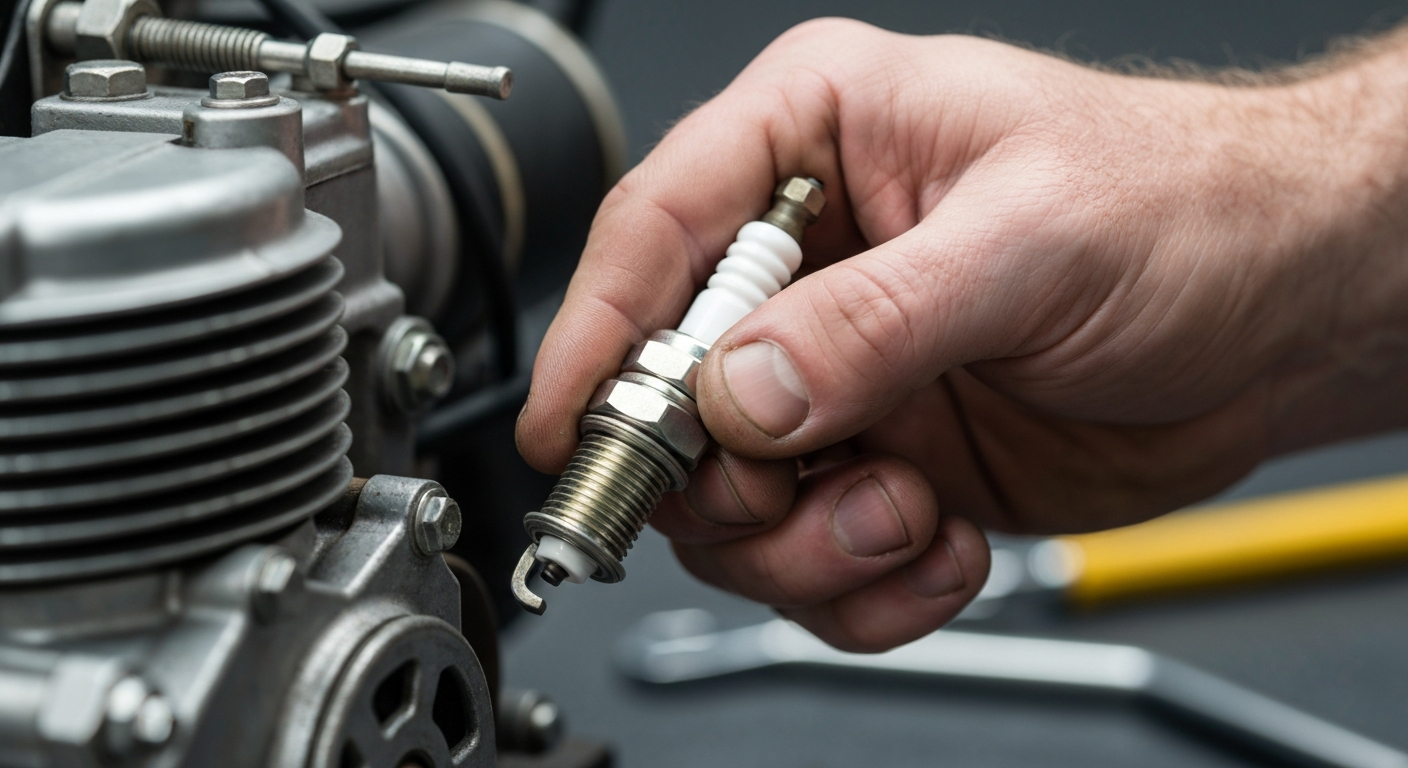
The plug ignites the fuel-air mix; if it's fouled or worn, no start. Disconnect the wire, remove the plug, inspect the tip, replace if black/oily/cracked/corroded, check the gap, reinstall by hand first, reconnect firmly. A dry black plug = too much fuel or dirty air filter; wet = flooded; oily = engine wear or too much oil. Plugs are cheap — replacing one is a smart early step.
Step 4 — Check the air filter
The engine needs clean air. Remove the cover and inspect: replace a dirty/oily/damaged paper filter; wash a foam filter if it's still good. Don't run it for regular use without a filter — dirt damages the engine. Quick test: if it briefly starts with the filter removed, the filter is likely the problem.
Step 5 — Consider a clogged carburetor
The carburetor mixes fuel and air; small passages clog when fuel gets old. Signs: starts only with starting fluid, starts then dies, surges, runs only on choke, leaks fuel, or won't start after sitting with old gas. Some homeowners clean their own carburetor, but small parts, gaskets, and jets are easy to lose or damage — a good point to involve a shop. A proper clean covers the bowl, jets, passages, float, and gaskets.
Step 6 — On a riding mower, check the battery
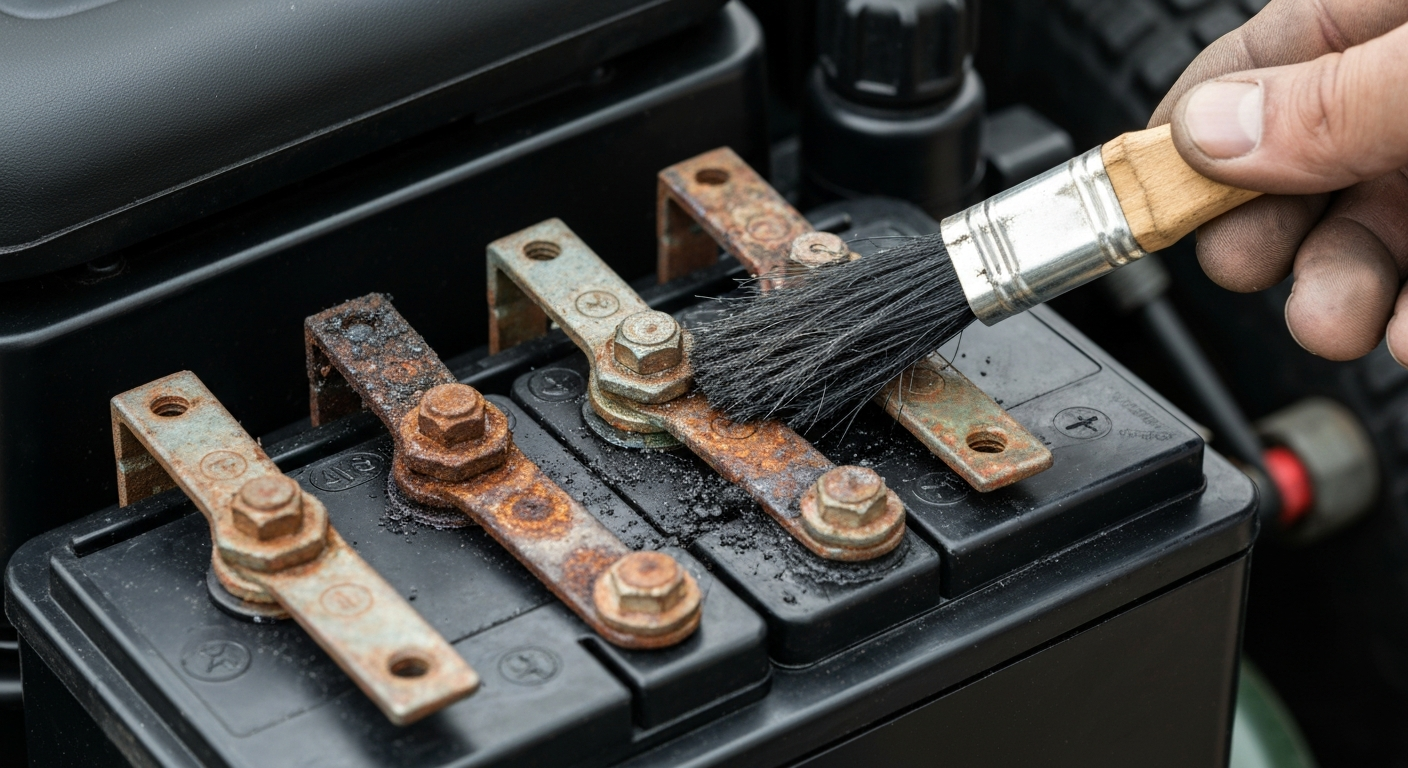
A clicking sound can mean a weak battery, bad connection, solenoid, or starter; no sound can mean a dead battery, blown fuse, bad switch, or interlock. Clean and tighten corroded terminals (corrosion blocks power). In neutral/park with the brake set and blades off, inspect cables, clean corrosion, charge, and retry. A battery that won't hold a charge needs replacing.
Step 7 — Check safety switches and controls
Modern mowers won't start unless controls are in the right position. Riding mowers: seat, brake-pedal, PTO/blade-engagement, neutral, and parking-brake switches. Push mowers: bail handle, kill cable, throttle, blade-control cable. Don't bypass a safety switch to "get it running" — a faulty switch should be diagnosed and repaired properly.
Step 8 — Check for flooding
Too much fuel in the cylinder can prevent starting. Signs: a gas smell, a wet plug, or it tries to catch but won't. Turn the choke off, wait several minutes, retry; dry the plug if wet; make sure the air filter isn't soaked. Flooding follows repeated start attempts, a stuck float, too much choke, or tipping the mower wrong.
Step 9 — Don't ignore mechanical problems
If the cord won't move, check for debris before assuming a locked engine. Disconnect the wire, then look under the deck for packed grass, rope, wire, or sticks around the blade. A bent blade can mean a damaged crankshaft — a hard hit on a stump or rock causes vibration, starting trouble, and serious engine issues.
A simple troubleshooting order:
1) Fresh fuel · 2) Oil level · 3) Air filter · 4) Spark plug · 5) Fuel reaching the carburetor · 6) Battery (electric start) · 7) Safety switches/controls · 8) Signs of carburetor clogging · 9) Blade obstruction or mechanical damage.
When to bring it to RLES
Bring it in if it still won't start after the basics, or if you see fuel leaks, heavy smoke, bad vibration, clicking with no crank, a stuck cord, carburetor trouble, damaged blades, or electrical issues. RLES repairs mowers and small engines for homeowners and crews across Farmington and St. Francois County — 6809 Highway 32 · (573) 955-0080 — and quotes before any work.
Frequently Asked Questions
Related Services & Guides
Still won't start?
A no-start doesn't always mean a major repair. Work the checklist, don't force anything stuck, and for diagnostics in Farmington, bring it to RLES on Highway 32.