
Spring Mower Tune-Up Checklist
By the RLES team
Spring in Farmington and across St. Francois County usually means one thing — the grass starts growing before most people are ready for it. After sitting all winter, your mower may need more than a quick pull of the cord. A basic spring tune-up helps it start easier, cut cleaner, run smoother, and last longer. Many tasks are doable at home with a few tools; the key is knowing what to check, what to replace, and when a shop should take over.
Start with a quick visual inspection
Before changing parts or adding fuel, give the mower a once-over: loose bolts or missing fasteners, cracked fuel lines, oil leaks, damaged wheels, bent handles, frayed pull cords, rusted deck areas, and (on riding mowers) worn belts. Tip a push mower only the way the manufacturer recommends — usually air-filter/carburetor side up so oil and fuel don't run where they shouldn't. For riding mowers, park on a flat surface, remove the key, set the brake, and let the engine cool before working underneath.
Why it matters: Small problems become big ones under load. A loose bolt, cracked fuel line, or worn belt can turn a simple startup into a mid-season breakdown.
Change the oil
Fresh oil protects the engine from heat, friction, and wear. If it sat all winter with old oil, replace it. Warm the engine a few minutes so the oil drains easier, shut it off, disconnect the spark plug wire, drain the old oil (plug or fill-tube per your model), refill with the manual's recommended oil, check the dipstick, and don't overfill. Dispose of used oil properly.
Common mistakes: Don't guess on oil type, don't overfill (it causes smoking and poor running), and never run a mower low on oil — a small engine can be damaged fast.

Replace or clean the air filter
A dirty filter makes the engine hard to start, cuts power, wastes fuel, and runs rough. Paper filters: hold up to the light; if dark, oily, or damaged, replace (don't wash unless the manual says it's washable). Foam filters: often washable with mild soap and water, fully dried and lightly oiled. Local tip: if you mow dusty lots, gravel edges, or roadside ditches around St. Francois County, check it more than once a season.
Check the fuel filter and lines
Many riding mowers and larger engines have a fuel filter; look for dark discoloration, sediment, cracked plastic, or leaks. Replace fuel lines that are stiff, cracked, swollen, or leaking.
Replace the spark plug
One of the cheapest, highest-value tune-up items. Disconnect the wire, remove the plug with a spark-plug socket, inspect for carbon/oil/damage, confirm the correct replacement, set the gap if required, thread in by hand first (avoid cross-threading), tighten snug (not over), reconnect.
- Black/sooty = rich mixture or dirty air filter.
- Oily = engine wear or overfilled oil.
- White/burned = overheating or a fuel-mix issue.
Sharpen and balance the blade
A sharp blade cuts cleanly; a dull one tears grass, browning the tips and stressing the lawn. Disconnect the wire, secure fuel, wear gloves, block the blade with wood, remove the bolt, mark the down-facing side, sharpen to the original angle, balance, and reinstall to proper torque. An unbalanced blade causes vibration that damages bearings, spindles, belts, and the crankshaft over time. Bent, cracked, or badly worn blades should be replaced, not sharpened.
Clean the mower deck
Packed grass cuts airflow, hurts cut quality, traps moisture, and invites rust. Disconnect the wire, let it cool, tip or raise safely, scrape with a plastic scraper, avoid forcing water into bearings/pulleys/electrical, and dry before storing. If a riding-mower deck is packed or the blades are hard to reach, a shop can handle it.
Drain old fuel and add fresh gas
Old fuel is the most common spring no-start cause — it goes stale, absorbs moisture, and gums the carburetor. If it sat for months, drain it and add fresh gas. Use stabilizer in fresh fuel (not already-degraded fuel) and run a few minutes so treated fuel reaches the carburetor.
Check belts, cables, wheels, and controls
Push mowers: drive/throttle cables, wheel-height adjusters, self-propel, handle bolts, pull cord. Riding mowers: deck belt, drive belt, battery terminals, tire pressure, steering, brakes, PTO, deck-height. Replace any belt that's cracked, glazed, loose, or slipping before the season gets busy.
Test safety features
Don't bypass safety switches. Push mowers: the bail handle should kill the engine when released. Riding mowers: check the seat switch, brake switch, blade-engagement switch, and reverse safety system. Replace missing/damaged shields, guards, and chutes.
When to bring it to RLES
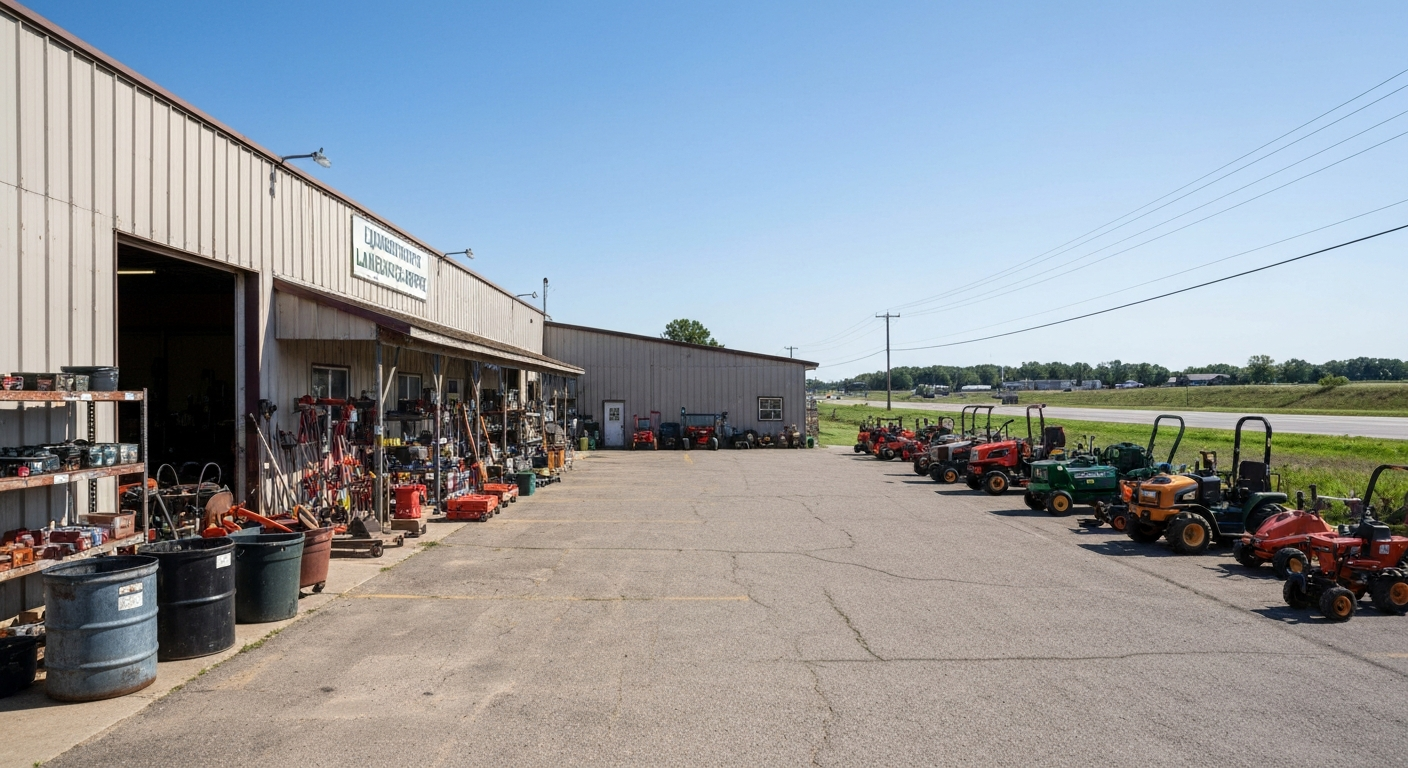
Some tune-up work is simple; other issues are better left to a shop — especially a no-start, rough running, heavy smoke, bad vibration, fuel leaks, or a bent blade/spindle. RLES repairs mowers and small engines at the Highway 32 shop in Farmington (6809 Highway 32 · (573) 955-0080) and quotes before any work begins.
Frequently Asked Questions
Related Services & Guides
Get Your Mower Ready for Spring
A spring tune-up saves time and helps your equipment last. Handle the basics yourself or let us look it over — for tune-ups, small-engine repair, blade service, or spring startup problems in Farmington and St. Francois County, bring it to RLES on Highway 32.