
Paver Patio Planning: Base to Polymeric Sand
By the RLES team
A paver patio turns an unused part of the yard into a real outdoor space — but the finished surface is only the top layer; what matters most is underneath. A patio that lasts depends on planning, proper excavation, a compacted aggregate base, even bedding sand, solid edge restraint, the right drainage slope, and well-installed polymeric sand. Skip one and it shows up later as sunken spots, spreading edges, puddles, or weeds. Around Farmington and St. Francois County, heavy rain, clay soil, and freeze-thaw make prep especially important.
Start with layout and size
Decide how you'll use it — a grill pad isn't a dining or fire-pit space. Plan furniture and walking room first (a patio that's big when empty feels tight with a table, chairs, grill, and planters). Consider how it connects to the house/steps/walkway, where water drains, and any downspouts, utilities, or tree roots. Outline it with paint, stakes, string, or a hose and walk it before digging.
Plan drainage slope away from the house
The patio should slope slightly away from the home — a common target is ~1/8" to 1/4" of fall per foot. Find the high point (usually where it meets the house) and the low point, and plan where runoff goes once it leaves the patio so you don't create a new problem.
Determine excavation depth
Depth = paver thickness + ~1" bedding sand + several inches of compacted aggregate base + room for slope. Don't just scrape the grass and lay pavers — remove organic material and soft topsoil and build on firm subgrade. Plan the final height vs. doors, steps, siding, and walkways; keep pavers below door thresholds so water can't run inside.
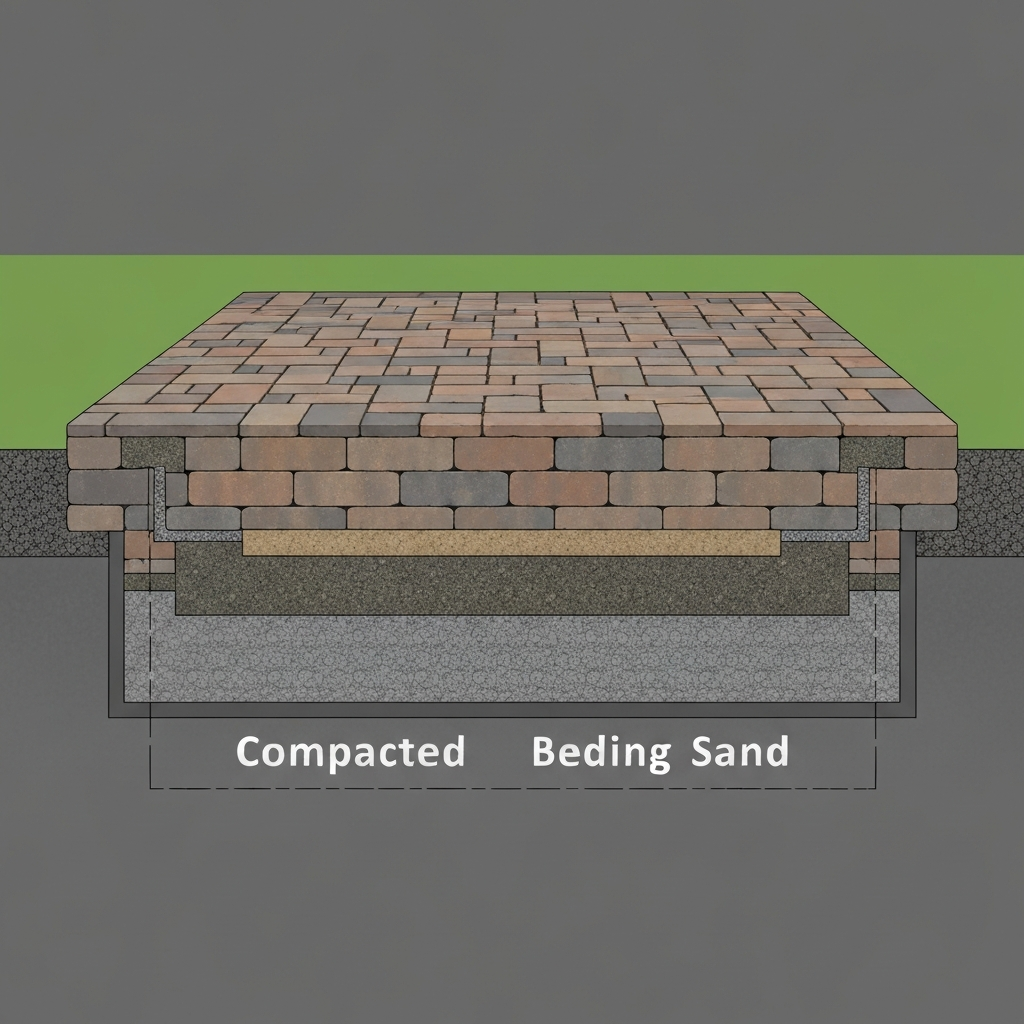
Prepare the subgrade
Shape the soil to the planned slope, remove soft spots/roots/mud, and compact it. In clay areas, don't work soil when it's too wet (it pumps and compacts poorly). Landscape fabric between soil and base can help separate materials but doesn't replace excavation, compaction, or drainage.
Install the compacted aggregate base
The base spreads weight and keeps pavers level. Use compactable crushed aggregate (not rounded gravel), spread in lifts, and compact each lift before the next (don't dump it all and compact only the top). Follow the slope, check grade with string lines/level, and make it firm — a plate compactor matters on a full patio.
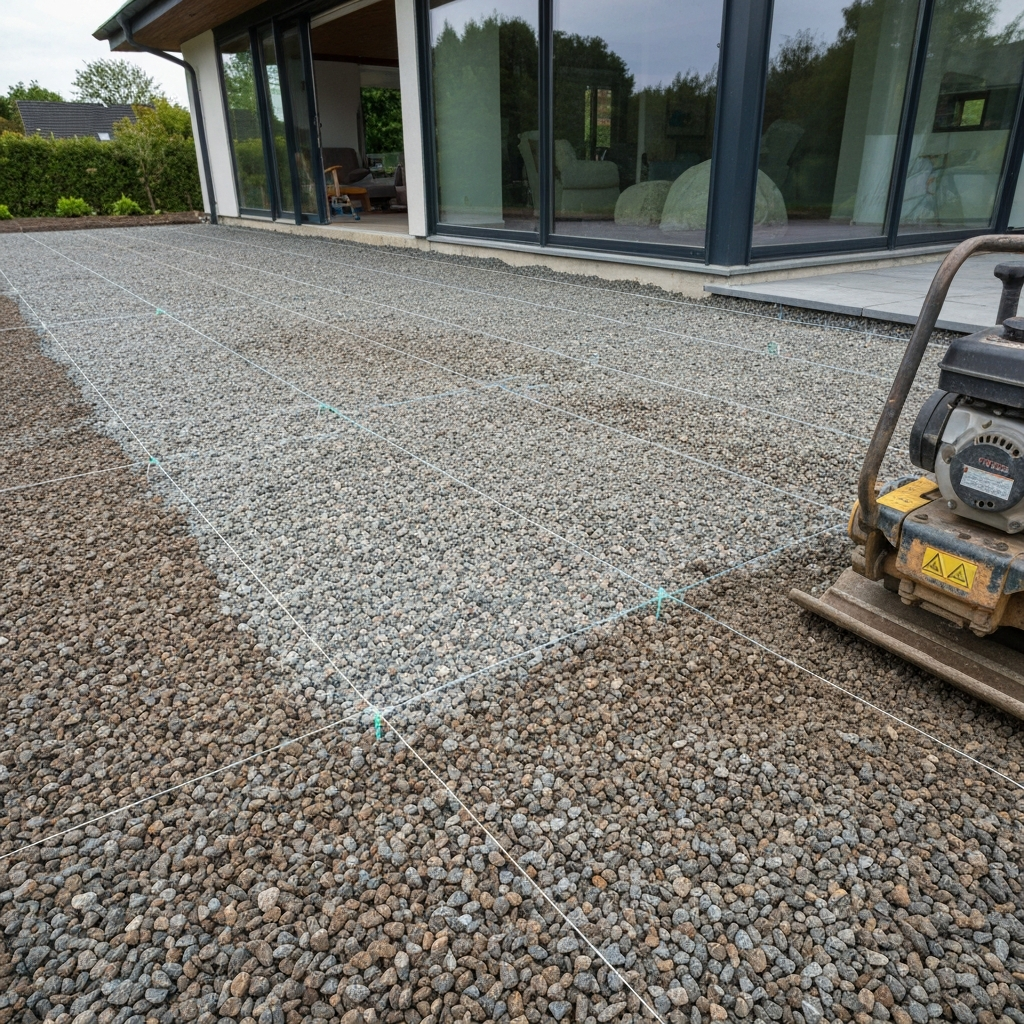
Add bedding sand
Screed ~1" of bedding sand over the compacted base (use screed rails for even thickness); don't walk in it after screeding. It's a setting bed, not a fix for a bad base — and not too thick, or it shifts and settles.
Choose a laying pattern
Running bond is clean and simple; herringbone is strong for traffic/movement; modular/random looks natural but needs more layout care. Decide how the pattern lines up with the house or main view, and check square by measuring corner-to-corner diagonals (equal = square).
Make cuts carefully
Most patios need cuts at edges, curves, and posts — plan to minimize tiny slivers. Use a paver splitter or masonry/cutoff saw with the right blade and safety gear; dry-lay sections to preview cuts. Clean cuts separate a professional patio from a rushed one.
Install edge restraint
Edge restraint keeps the patio from spreading over time. Install it around the perimeter, secured into the compacted base (not loose soil), per the manufacturer's spacing. A house, step, or concrete edge can act as one fixed side; open lawn edges still need edging.
Sweep in polymeric sand
Polymeric sand fills the joints and locks the pavers together (less weed growth and washout). The surface must be dry; sweep it in, settle with a plate compactor (with a pad), top off, sweep the surface clean, then activate with water per the product. Don't overwater or leave a haze — it can harden where you don't want it. Polymeric sand needs dry weather to cure.
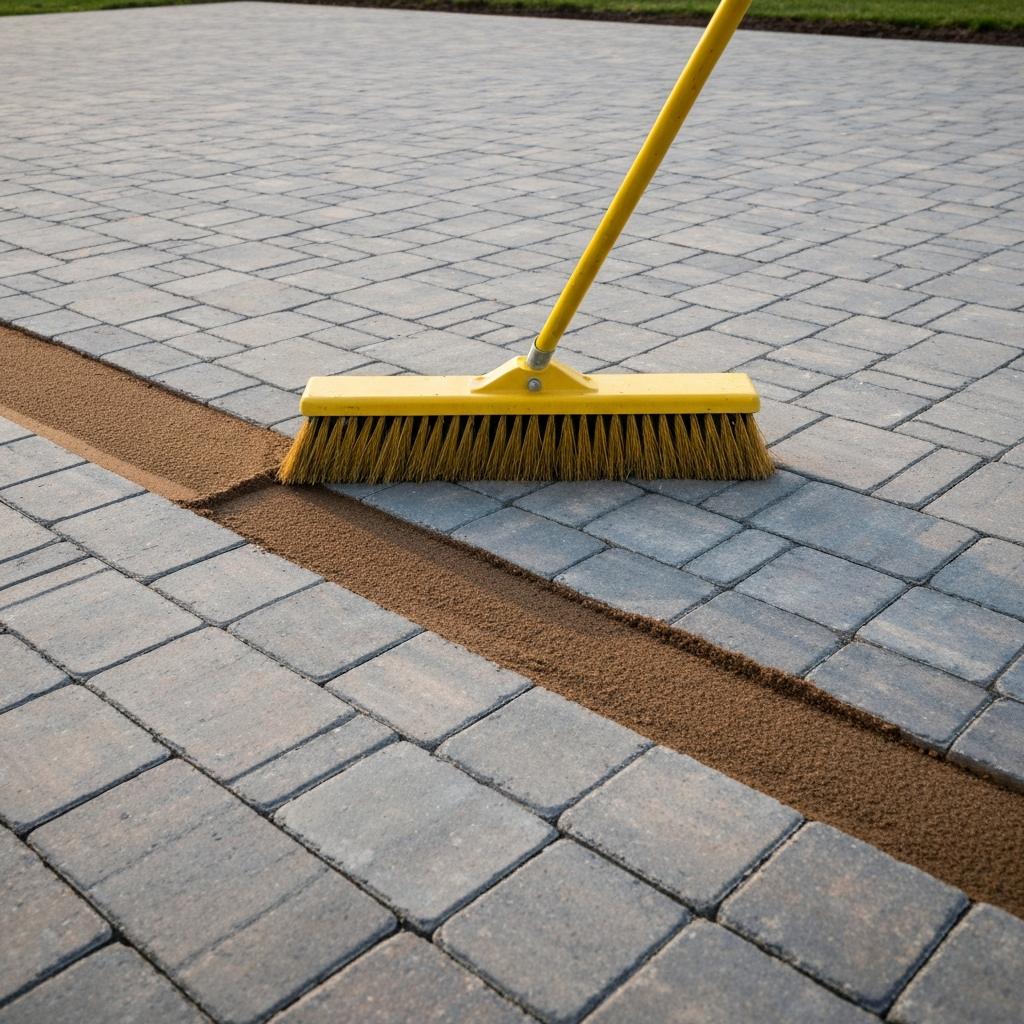
Final check
Before furniture, inspect for uneven pavers, low joints, loose restraint, or spots that hold water — easy to fix early. After the sand cures, add furniture and avoid dragging heavy items across new pavers.
Get your materials from RLES
RLES supplies the pavers AND the supporting materials: pavers in available styles/colors, compacted aggregate base, bedding sand, drainage stone, polymeric sand, and edge restraint — ordered to order, pickup at 6809 Highway 32 or local delivery across Farmington & St. Francois County. (573) 955-0080.
Key Takeaway
A paver patio is a project where the hidden layers matter — good excavation, a compacted base, proper slope, clean bedding sand, sturdy edge restraint, and polymeric sand work together.
Frequently Asked Questions
Related Materials & Guides
Get Pavers & Base Materials in Farmington
For pavers, base rock, sand, polymeric sand, edging, and drainage materials in Farmington & St. Francois County, call RLES at (573) 955-0080 or visit 6809 Highway 32.