Choosing the Right Gravel for Your Driveway
By the RLES team
A gravel driveway is a practical, affordable choice for homes, farms, and shops around Farmington and St. Francois County — but not all gravel works the same. The right material depends on your soil, slope, drainage, traffic, existing base, and whether you're building new or refreshing. A drive that looks fine on day one can rut or wash out if the wrong material is used or the base isn't prepared. Here's how to choose, layer, and order it.
Start with the purpose
New driveway from scratch? Topping an existing drive? Fixing potholes/ruts? Washing out? Carrying trucks, trailers, or equipment? A light residential drive needs different material than a long rural drive under heavy loads. New drives need a compacted base + finish layer; a refresh may only need a top layer — but only if the base is solid. A thin layer of pretty gravel over a soft, muddy, rutted drive won't last.
Base layer vs. top layer
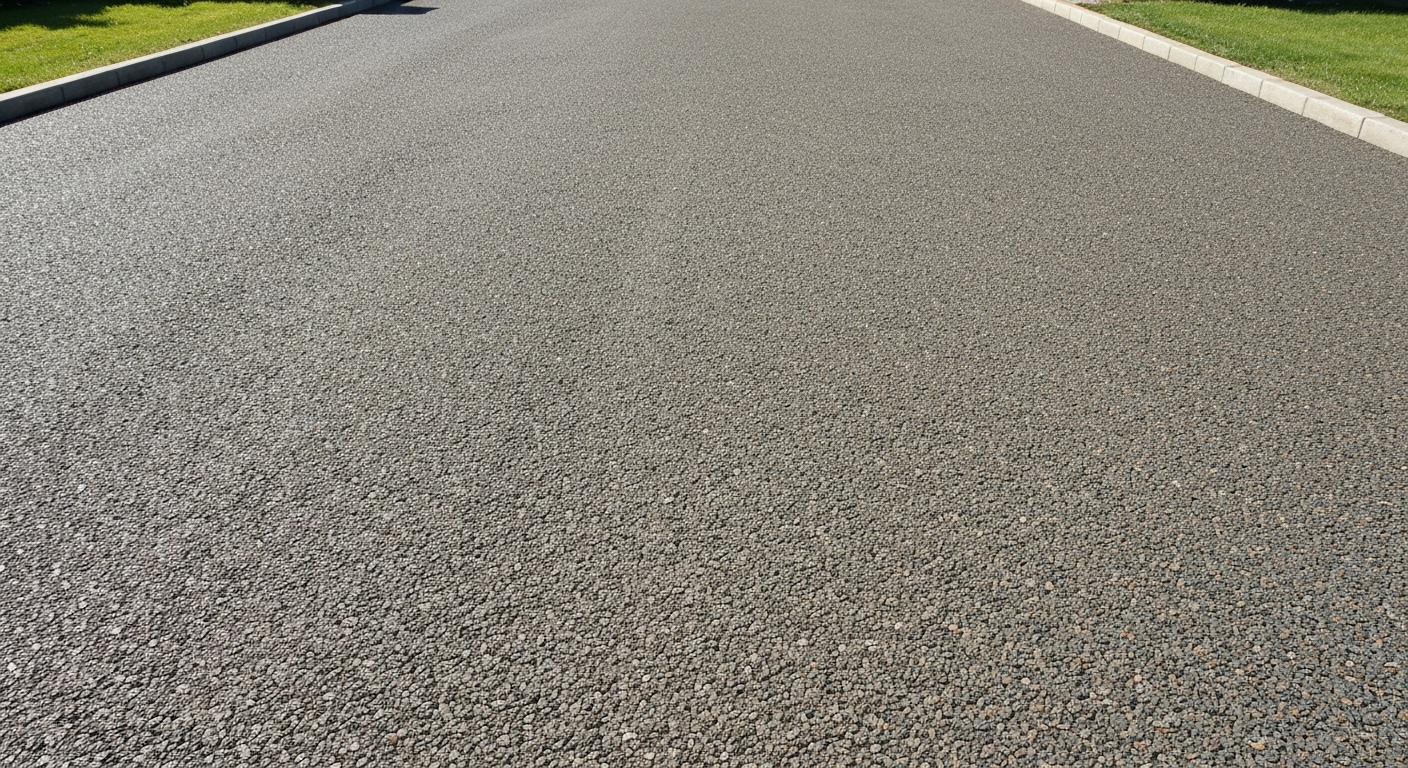
Base = the foundation: larger, angular stone that locks together and supports weight; prevents sinking and rutting (critical for new drives, wet areas, clay soil, heavy vehicles). Top = the driving surface: smaller crushed material that compacts into a smoother finish. Don't make the top too loose, too round, or too deep — loose rounded stone shifts under tires and spreads into the yard.
Common driveway gravel types
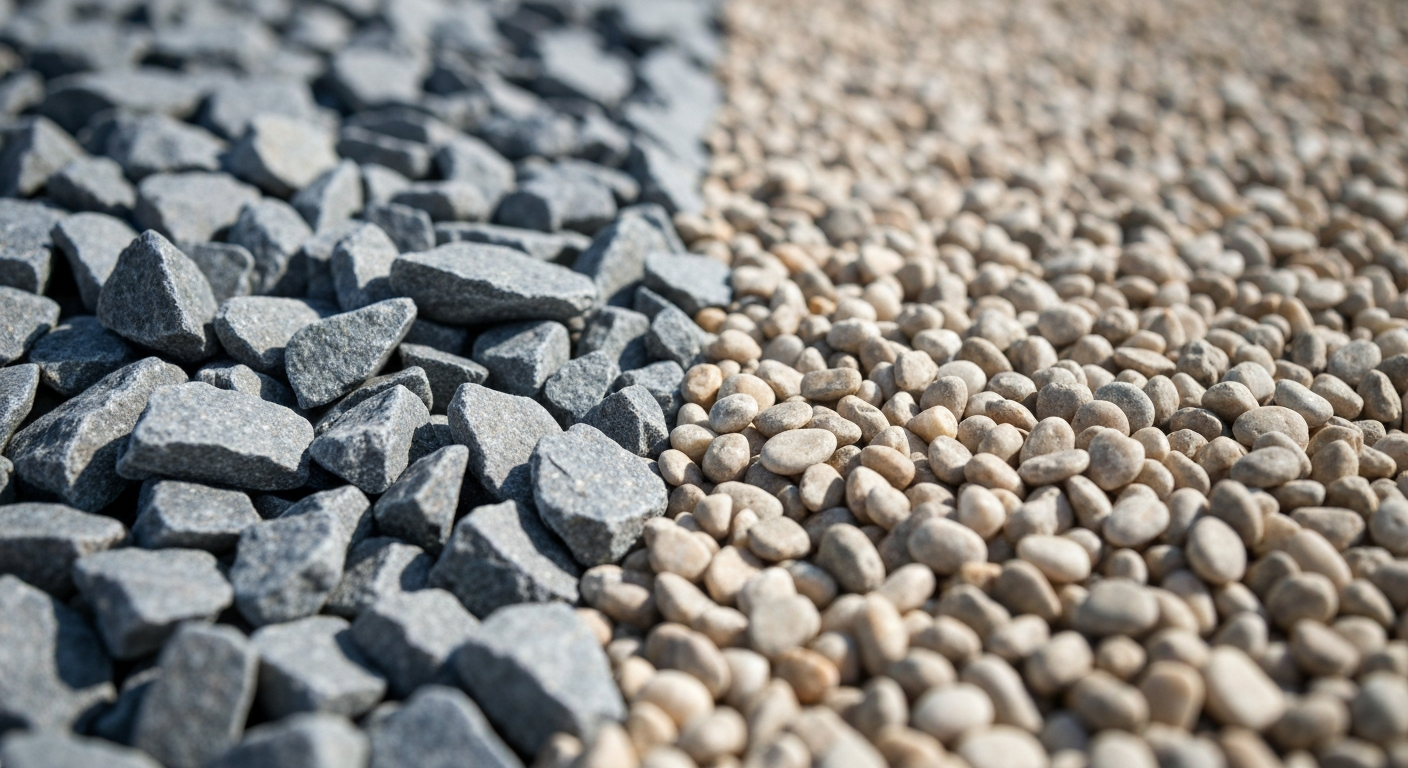
(Local names vary — describe your project when ordering.) Crushed limestone/stone: angular, locks together, drains well — base or top by size. Clean stone: drains well, less compaction, can shift if used alone. Crusher run / dense grade: crushed stone + fines that bind and compact — strong for surface and base. Pea gravel: rounded and smooth — looks nice but moves under tires; better for decorative areas and paths than a main drive.
How deep should it be?
New driveway: several inches of compacted base + a top layer — often ~4–6"+ total depending on soil, drainage, and use (soft soil/heavy traffic needs more). Topping a solid drive: ~2". Deep potholes should be repaired properly, not just covered. Don't pile a thick loose top layer — a thinner compacted surface drives better.
Drainage & grading matter more than people think
Most gravel-driveway problems are water problems. Shape the drive so water sheds off — many use a slight crown (center higher than edges). On slopes, control water with grading, ditches, swales, or culverts. Trouble signs: recurring potholes, gravel washing into the yard/road, mud pumping up, standing water, deep ruts, soft edges, exposed base. If you see these, fix grading/drainage before adding more stone.
By the ton vs. by the cubic yard
A ton is weight (heavy stone is often sold by the ton); a cubic yard is volume (27 cubic feet). Conversion isn't exact — it depends on stone size, moisture, and compaction (wet weighs more; larger stone has more air gaps). Best to call with your measurements.
How to estimate gravel
Length × Width × Depth(ft) = cubic feet, ÷ 27 = cubic yards. Depth: 2"=0.167 ft, 3"=0.25, 4"=0.333, 6"=0.5.
Worked example: 80 ft × 10 ft drive, 2" top dressing → 800 sq ft × 0.167 = 133.6 cu ft ÷ 27 ≈ 5 cubic yards (before compaction/low spots). If sold by the ton, give us the measurements and we'll estimate tonnage for that gravel.
Maintenance tips
Keep water moving (clean ditches, fix low spots). Fill potholes right: remove loose material, square the edges, add gravel, compact — don't just dump into a wet hole. Rake/grade as needed to restore the crown. Top off before the base is exposed or ruts get deep — it's cheaper than a rebuild.
Get driveway gravel from RLES
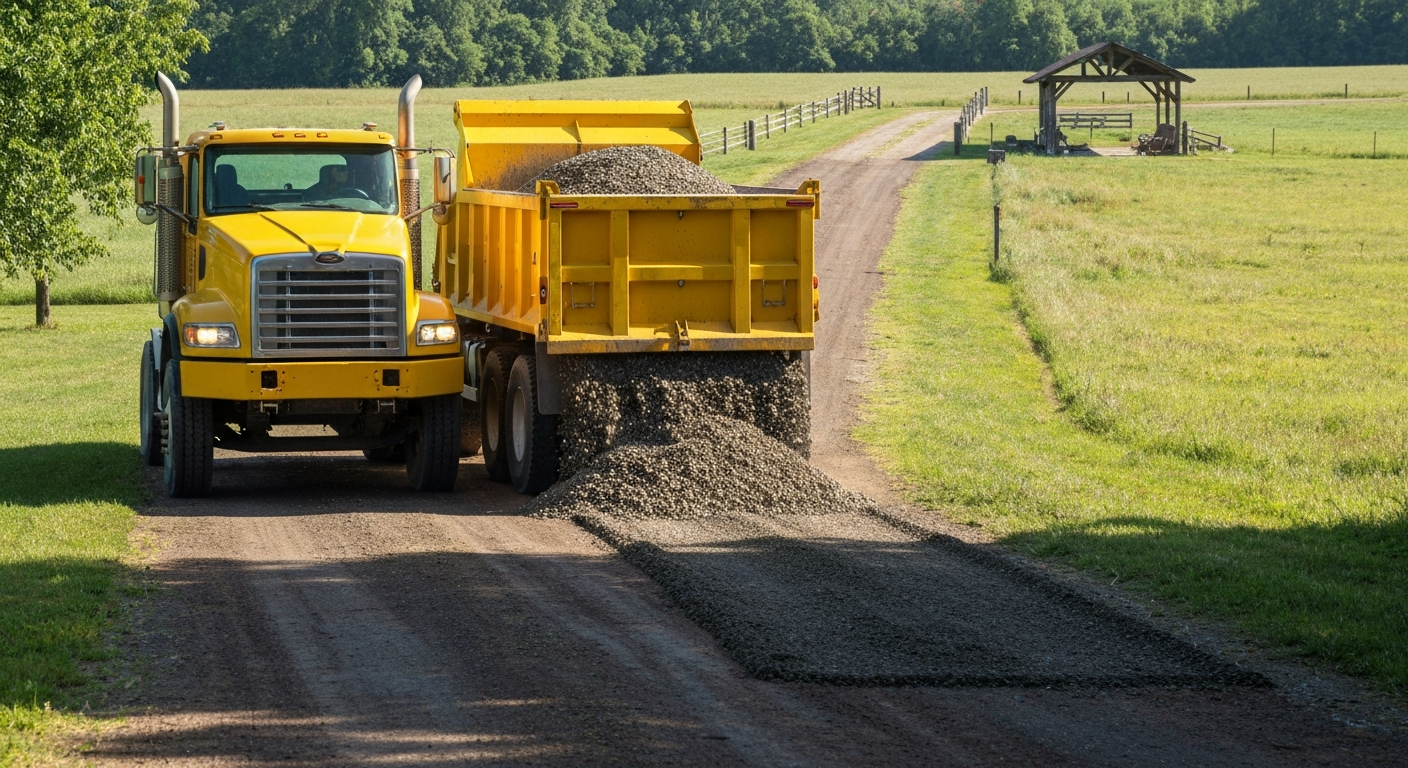
RLES supplies gravel, crushed stone, and rock by the ton or cubic yard with pickup or local delivery — especially helpful for heavy loads — across Farmington and St. Francois County. Ordered to order, no online checkout. Call or stop by with your measurements: 6809 Highway 32, Farmington, MO 63640 · (573) 955-0080.
Key Takeaway
The right driveway gravel is about more than looks — material, depth, a stable base, and drainage all matter. If the drive is soft, washed out, or full of potholes, address the base and water flow before adding stone.
Frequently Asked Questions
Related Materials & Services
Ready to order driveway gravel?
For driveway gravel by the ton or yard in Farmington, call RLES at (573) 955-0080 about materials, pickup, and local delivery.